Lake Mburo National Park is the smallest Savannah national park in Uganda. It covers an area of about 370 square kilometers, and around ten percent of this area is made up of wetlands. The park sits on very old Precambrian metamorphic rocks that are more than 500 million years old.
The park is named after Lake Mburo, which is one of fourteen lakes found in this area. These lakes form a wetland system stretching about 50 kilometers and are connected by swamps. Five of the lakes are inside the park boundaries. Lake Mburo National Park lies at an altitude between 1,219 and 1,828 meters above sea level.
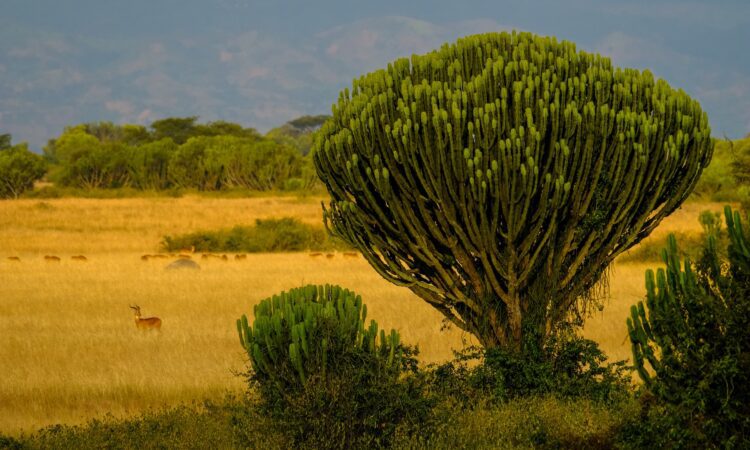
The vegetation in Lake Mburo National Park includes wetlands, open Savannah grasslands, woodlands, forested valleys, rocky hills, bushes, swamps, and riverbank forests. The park lies in a dry zone between the Mountains of the Moon and Lake Victoria. Because of this location, it receives an average of about 800 millimeters of rainfall each year.
History of Lake Mburo National Park
In 1933, the colonial government declared the Lake Mburo area a controlled hunting ground. In 1963, it was upgraded to a game reserve. The local Banyankole and Bahima communities lived in the area and used it mainly for cattle grazing.
In 1981, these communities were removed from the area, and in 1983, Lake Mburo became a national park. Many people believe the removal was linked to efforts to weaken rebel groups that opposed the government at that time. The affected communities were not given alternative land, which led to strong protests.
After the fall of the Obote government, many local people returned and resumed grazing cattle in the park. This caused damage to park buildings, loss of wildlife, and injuries to some park staff. In 1986, only a smaller portion of the original land was officially gazetted as a national park. Illegal grazing still happens in some parts of the park today. The park also contains cultural and historical sites important to local communities.
In 2005, Lake Mburo was declared a lion conservation area by IUCN. However, lions are no longer present in the park. Many were killed by locals in the late 1990s. One lion injured three people near nearby communities, and the Uganda Wildlife Authority later put it down.
Entry Fees
Entry fees for Lake Mburo National Park vary by visitor category. Foreign nationals pay 40 US dollars, foreign non residents pay 30 US dollars, and East African residents pay 20,000 Uganda shillings. Children who are foreign nationals pay 20 US dollars, foreign non resident children pay 10 US dollars, and East African children pay 5,000 shillings.
Annual passes are also available. Foreign residents pay 500 US dollars, foreign non residents pay 350 US dollars, and East African residents pay 150,000 shillings. Tour company drivers enter free, while taxi drivers pay 100,000 shillings. Vehicle entry fees depend on vehicle type and residency.
Animals in Lake Mburo National Park
Lake Mburo National Park is home to about 68 mammal species. Wildlife can be seen during day game drives, night game drives, walking safaris, and horseback rides.
Animals found in the park include impalas, zebras, warthogs, elands, buffaloes, hippos, crocodiles, civets, genet cats, leopards, serval cats, jackals, klipspringers, hyenas, topis, oribis, and reedbucks.
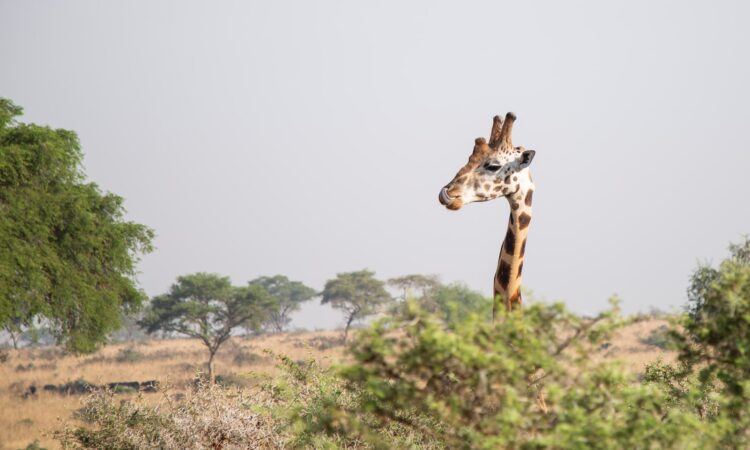
Giraffes were reintroduced into the park in recent years. Lake Mburo has the highest number of zebras in Uganda and a strong population of leopards, which are often seen during night drives.
Bird Watching in Lake Mburo National Park
Lake Mburo National Park is a good destination for bird watching, with about 350 bird species recorded. Birds commonly seen include bare faced go away bird, red necked spurfowl, flappet lark, southern red bishop, yellow throated longclaw, black bellied bustard, rufous chested swallow, coqui francolin, emerald spotted wood dove, brown parrot, Nubian woodpecker, crested francolin, black bellied barbet, white winged warbler, African wattled plover, blue naped mousebird, green wood hoopoe, African grey hornbill, and many others.
Boat Cruises on Lake Mburo
Boat rides are offered on Lake Mburo and are one of the main activities in the park. While on the boat, visitors can see hippos and Nile crocodiles at close range. Many water birds are also seen along the shores. Boat cruises usually take place in the afternoon when animals come to drink.
Hiking and Nature Walks
Lake Mburo National Park is one of the best parks in Uganda for guided nature walks. Walking safaris lead visitors to Rubanga Forest, hilltops, lakeshores, and the salt lick at Rwonyo, where animals gather to lick salt. Walks offer close views of animals and birds while learning about plants and tracks from a ranger guide.
Sport Fishing
Sport fishing is allowed in designated lakes within the park. Visitors must obtain a fishing permit and bring their own fishing gear. The most common fish caught is tilapia. Fishing is mainly done at Mazinga. Guests can arrange to have their catch prepared at their lodge.
Horseback Riding Safaris
Lake Mburo National Park is one of the few parks in Uganda where horseback riding safaris are offered. This activity allows visitors to move quietly through the park among animals such as antelopes and zebras. Horseback safaris are mainly organized by Mihingo Safari Lodge and are suitable for both beginners and experienced riders.
Location and Access
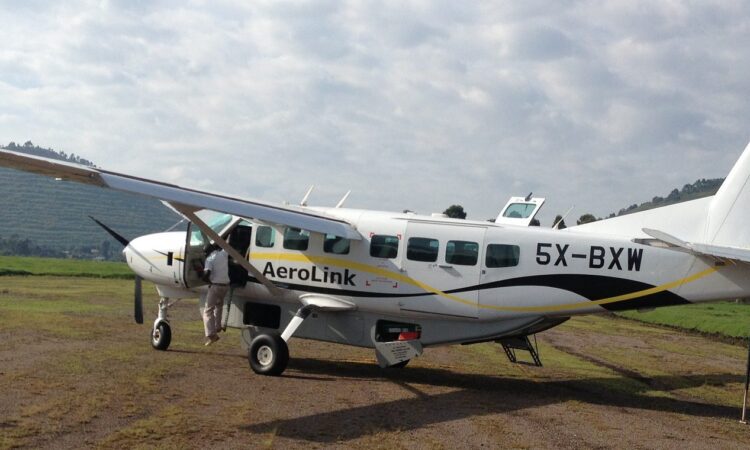
Lake Mburo National Park is the closest national park to Kampala. It is located in Kiruhura District, near Mbarara. The park is about 240 kilometers west of Kampala and can be reached in about three to four hours by road. It is also a convenient stopover when traveling to other national parks in western Uganda.
Best Time to Visit Lake Mburo National Park
Lake Mburo National Park can be visited throughout the year. The best time to visit is during the dry seasons from June to August and December to February. During these months, grass is shorter, making wildlife easier to see, and roads are in better condition.
The wet seasons from September to November and March to May are also good for bird watching. During these months, the park is less crowded, and accommodation rates may be lower.
Accommodation in Lake Mburo National Park
There are many accommodation options in and around Lake Mburo National Park to suit different budgets. These include Mihingo Safari Lodge, Rwakobo Rock Lodge, Mburo Safari Lodge, Arcadia Cottages Mburo, Mantana Tented Camp, Leopard Rest Camp, Rwonyo Rest Camp, and Eagle’s Nest Lodge.
Lake Mburo National Park is an ideal destination for travelers interested in wildlife, walking safaris, boat rides, bird watching, and unique activities like horseback riding in Uganda.