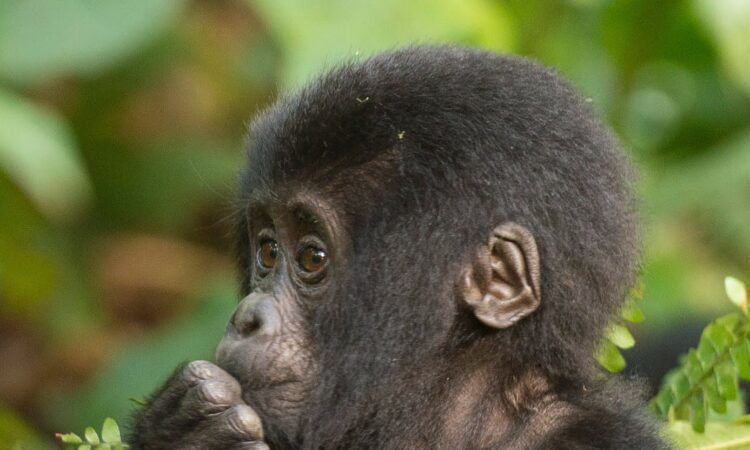
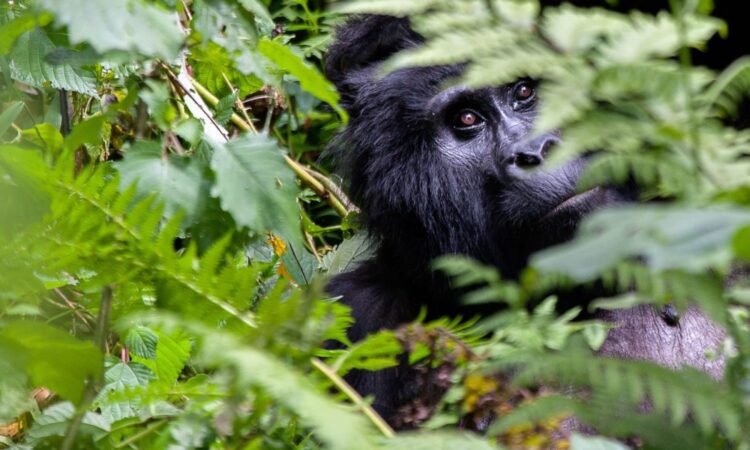
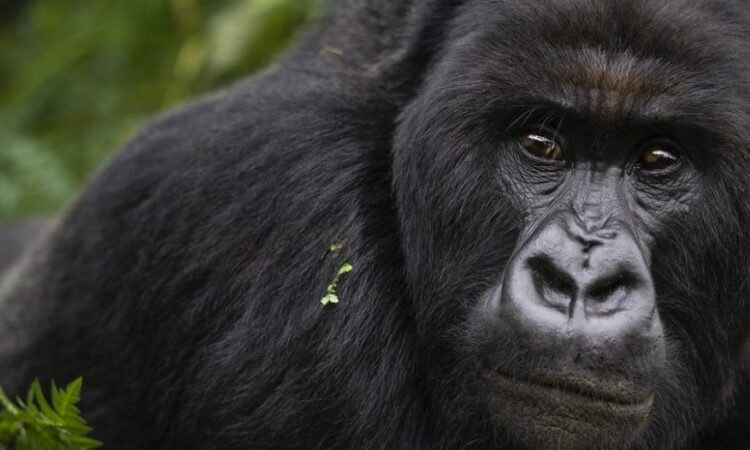
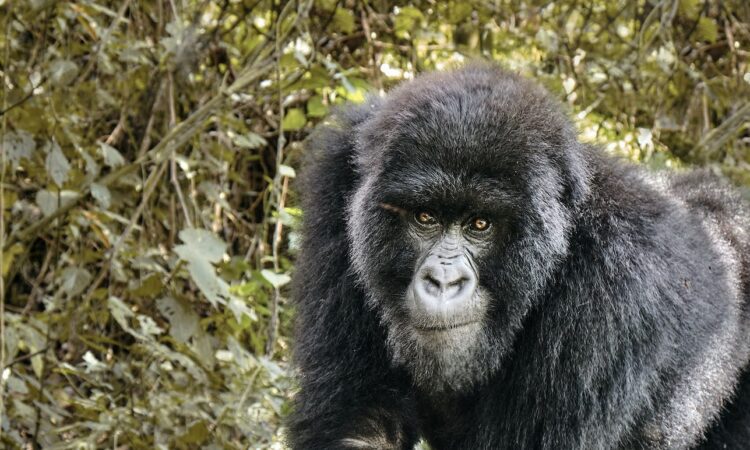
The eastern lowland gorilla, also known as Grauer’s gorilla, is found only in the eastern part of the Democratic Republic of Congo. This gorilla species lives in mountain and lowland rainforests and cannot be seen anywhere else in the world. Eastern lowland gorillas are found in protected areas such as Kahuzi-Biega National Park, Usala Forest, Itombwe Massif, Tayna Nature Reserve, and Maiko National Park.
Kahuzi-Biega National Park is the main place where tourists can see eastern lowland gorillas. The park is located in eastern Congo near the border with Rwanda and close to Lake Kivu. It covers about 6,000 square kilometers and is named after two volcanoes found inside the park, Mount Kahuzi and Mount Biega.
The park is home to endangered eastern lowland gorillas, which are listed on the International Union for Conservation of Nature Red List. Because of its gorillas and rainforest ecosystem, UNESCO declared Kahuzi-Biega a World Heritage Site in 1980.
Kahuzi-Biega National Park supports a wide range of wildlife. The park has more than 1,178 plant species, 349 bird species, 136 mammal species, 44 amphibians, and 69 reptiles. The park landscape includes forests, swamps, rivers, bamboo areas, grasslands, and wetlands. Annual rainfall is about 1,800 millimeters, and temperatures range between 10.4 and 18 degrees Celsius.
Eastern lowland gorillas are easy to identify. They have large hands, a short nose, and a strong body. They are the largest of all gorilla subspecies.
History of Kahuzi-Biega National Park
Kahuzi-Biega began as a wildlife reserve in July 1937 during Belgian colonial rule. It became a national park in 1970 due to the work of Adrien Deschryver, a Belgian conservationist. In 1975, the park expanded to its current size.
During this expansion, more than 13,000 people from the Shi community were relocated. In 1999, a conservation plan was introduced to protect both the park and surrounding communities. Despite improvements in security, the park remains on the World Heritage in Danger list.
Gorilla Trekking in Kahuzi-Biega
Gorilla trekking is the main activity in Kahuzi-Biega National Park. There are two habituated groups of eastern lowland gorillas that visitors can trek. Treks start early in the morning with a ranger briefing.
Only healthy visitors are allowed to join the trek. Gorillas can easily catch human diseases, so visitors must keep a distance of at least eight meters. Gorillas recover slowly from illness. The Gorilla Doctors organization treats injured and sick gorillas, especially those harmed by wire snares.
The trek can take from one and a half hours to several hours depending on the location of the gorillas. Eastern lowland gorillas are often easier to track than mountain gorillas because they live in more open and flat forest areas. They are also the only gorilla subspecies that can survive in zoos.
Visitors should pack waterproof hiking boots, gloves, a rain jacket, long sleeved clothing, drinking water, snacks, and insect repellent.
Kahuzi-Biega received its first tourists in 1973, making it the first park where eastern lowland gorillas were opened for tourism.
Congo Lowland Gorilla Permits
To trek eastern lowland gorillas, visitors must buy a gorilla permit. A Congo gorilla trekking permit costs 400 USD per person in both high and low seasons. This is cheaper than permits in Rwanda and Uganda.
Only eight healthy visitors aged 15 years and above are allowed to visit one gorilla group per day. After finding the gorillas, visitors are allowed to stay with them for one hour.
All visitors must have a Congo tourist visa. The visa can be applied for online or obtained before travel at border points.
Wildlife in Kahuzi-Biega National Park
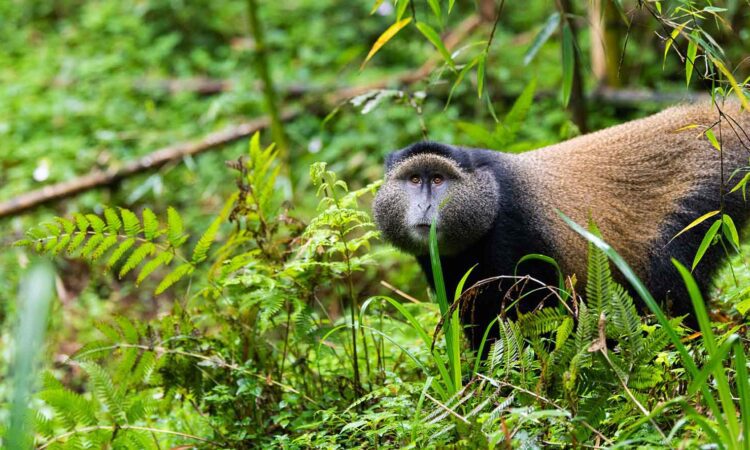
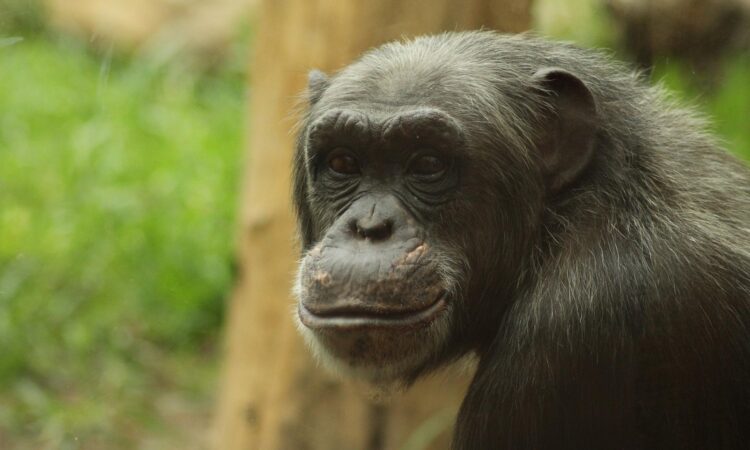
Besides eastern lowland gorillas, the park is home to chimpanzees, owl faced monkeys, bush buffalo, forest elephants, forest hogs, civets, otters, squirrels, bats, hippos, and leopards.
Birdlife is also rich, with about 349 bird species. Birds found here include Rockefeller’s sunbird, African green broadbill, Congo peafowl, Shelley’s crimsonwing, Grauer’s broadbill, Rwenzori turaco, and Grauer’s warbler.
Birdwatching requires advance planning because there are no regular birding tours. Visitors must arrange a private bird guide.
Some visitors also hike nearby mountains, though this activity is less common than gorilla trekking.
Getting to Kahuzi-Biega National Park
Most visitors enter Kahuzi-Biega through Rwanda. Travelers cross at the Rusizi Bukavu border and continue to the park. This route is safer and easier than entering through Congo directly.
From Kigali, the drive takes about six hours. Visitors can also travel from Goma, but the road conditions are poor, especially in the rainy season.
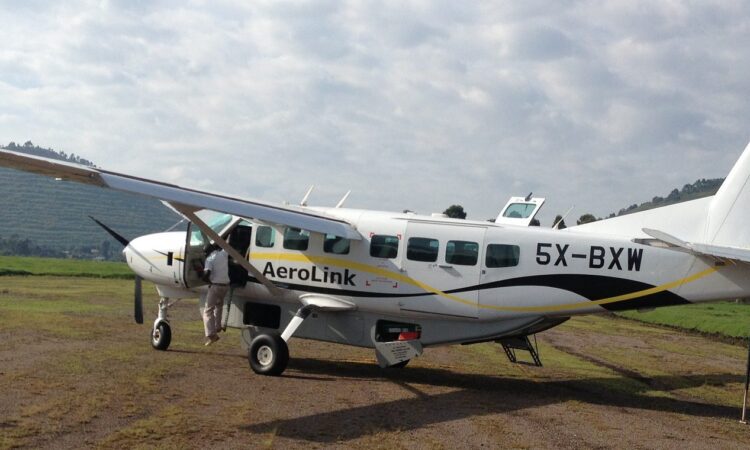
Flights are available to Kavumu Airport near Bukavu, but they are limited and may not run daily.
Best Time to Visit Kahuzi-Biega
Kahuzi-Biega can be visited throughout the year. The best months are June to September and December to February. These are the dry seasons when roads and forest trails are easier to use.
Rain can still fall during dry months because of the tropical climate. Visitors should always carry rain gear, warm clothing, and insect repellent.
Before visiting, travelers should always check the security situation and use a trusted tour company.
Accommodation Near Kahuzi-Biega
Accommodation is available in Bukavu town and near the park. Options include Orchids Safari Lodge, Horizon Hotel, Hotel Begonias, Exodus Hotel, Ruby Guest House, and Coco Lodge.
It is best to stay in places that regularly host international travelers. These lodges offer better food and services. Some local guesthouses serve traditional meals that may include reptiles, which many visitors prefer to avoid.
Eastern lowland gorilla trekking in Kahuzi-Biega National Park offers a rare chance to see one of the world’s most endangered primates in its natural forest home.