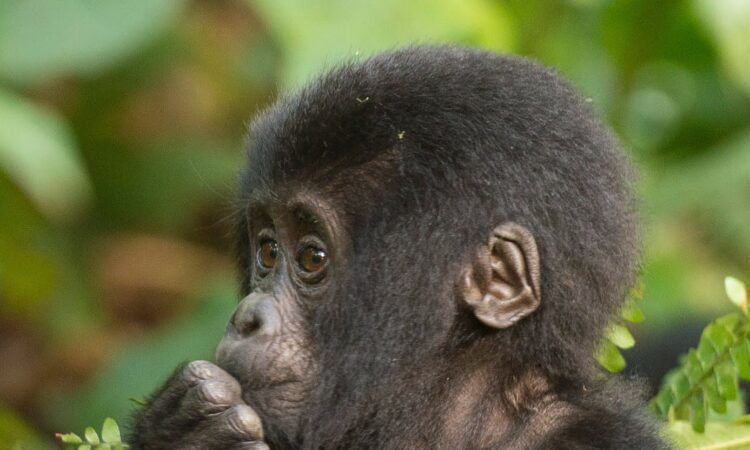
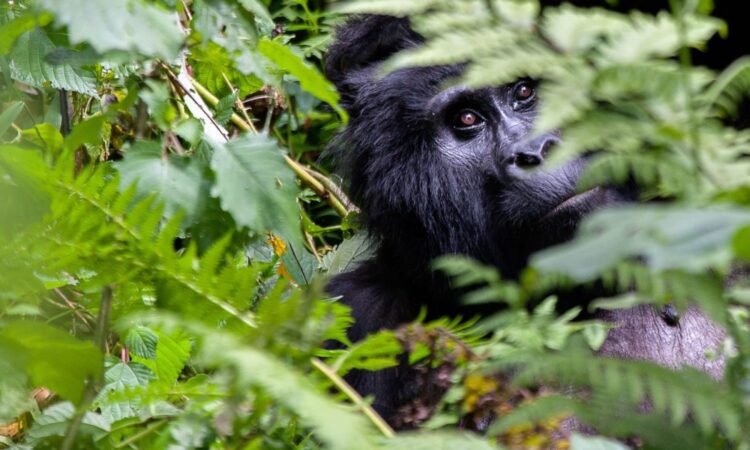
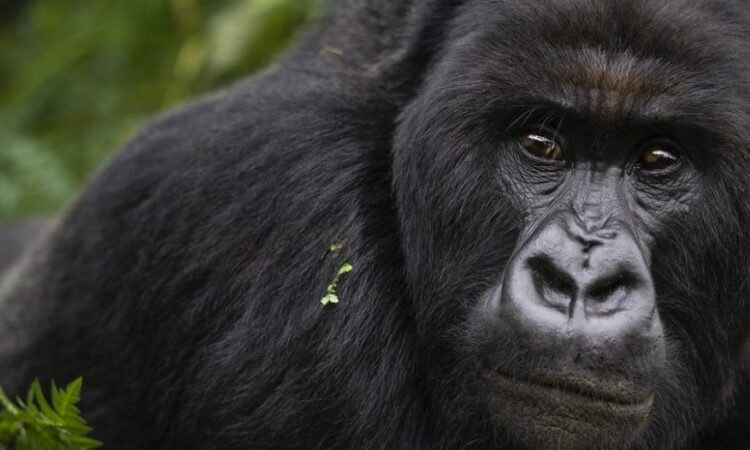
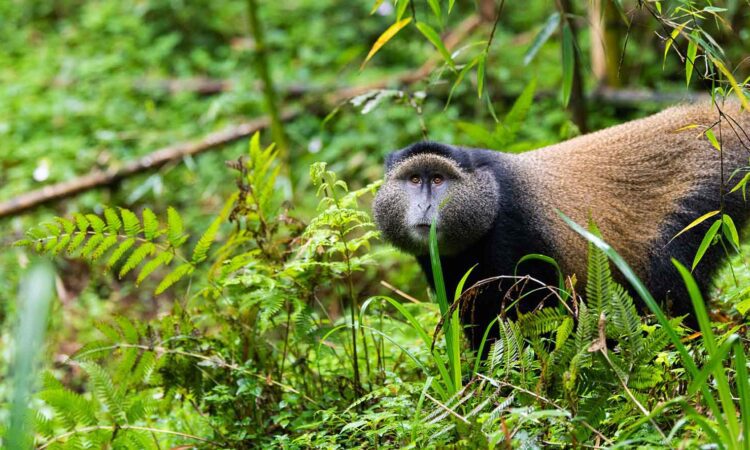
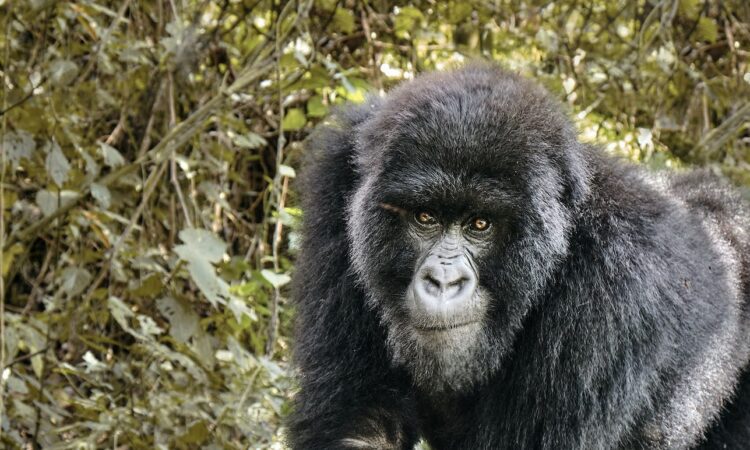
In Congo, mountain gorillas are found in Virunga National Park. This park is home to eight habituated mountain gorilla families that tourists can visit. These families include Nyakamwe, Bageni, Lulengo, Mapuwa, Munyaga, Rugendo, Humba, and Kabirizi gorilla families.
Each gorilla family can only be visited by a group of eight tourists per day. This rule helps reduce stress on the gorillas and protects their natural behavior. Gorilla trekking in Congo is more affordable compared to Uganda and Rwanda. A gorilla trekking permit in Congo costs about 400 US dollars per person per trek.
Tourists planning to trek mountain gorillas should book permits in advance, especially during peak travel seasons. Gorilla trekking can be done throughout the year, but the best time is during the dry seasons when forest trails are easier to walk and park roads are accessible.
The Senkwekwe gorilla orphanage was opened in 2010 at the headquarters of Virunga National Park. It is the only orphanage for mountain gorillas in the world. The sanctuary was created to protect orphaned mountain gorillas that lost their families due to poaching and armed conflict. The orphanage plays an important role in mountain gorilla conservation in Congo.
Mountain gorillas are an endangered primate species living in the humid forests and mountain ranges of Central and East Africa. They are found only in three countries: Democratic Republic of the Congo, Uganda, and Rwanda. Due to threats such as habitat loss, poaching, and civil conflict, mountain gorillas were listed on the IUCN endangered species list in 2018.
Mountain gorillas have thick fur, which helps them survive in cold and wet mountain environments. They spend most of their daytime feeding on plants. Around midday, they rest before continuing to forage until evening. Each night, mountain gorillas build new nests using tree branches and leaves. These nests are usually made on the ground, but during heavy rain, they may sleep in trees.
Their main diet is vegetation such as leaves, shoots, stems, and roots. Sometimes, they also eat small insects. Adult males eat more food than females. A fully grown male can eat up to 34 kilograms of vegetation in a single day, while an adult female eats about 18 kilograms.
Mountain gorillas live in family groups led by a strong adult male called a silverback. The silverback protects the group from danger and makes decisions for the family. A typical group includes one dominant silverback, several adult females, and their young ones. Each mountain gorilla has a unique nose print, which is used by researchers to identify individuals. Mountain gorillas share about 98 percent of their DNA with humans.